Pasta Primavera with Pesto
Highlighted under: World Cuisine
I absolutely adore making Pasta Primavera with Pesto for a weeknight meal. It’s a vibrant dish that showcases seasonal vegetables and packs a punch with its homemade pesto. Every bite is a celebration of flavors, and I love how easy it is to prepare. The combination of fresh ingredients makes this dish both nutritious and satisfying. Whether I'm cooking for family or impressing friends, this recipe always hits the spot. Plus, it’s a great way to use up any veggies I have on hand!
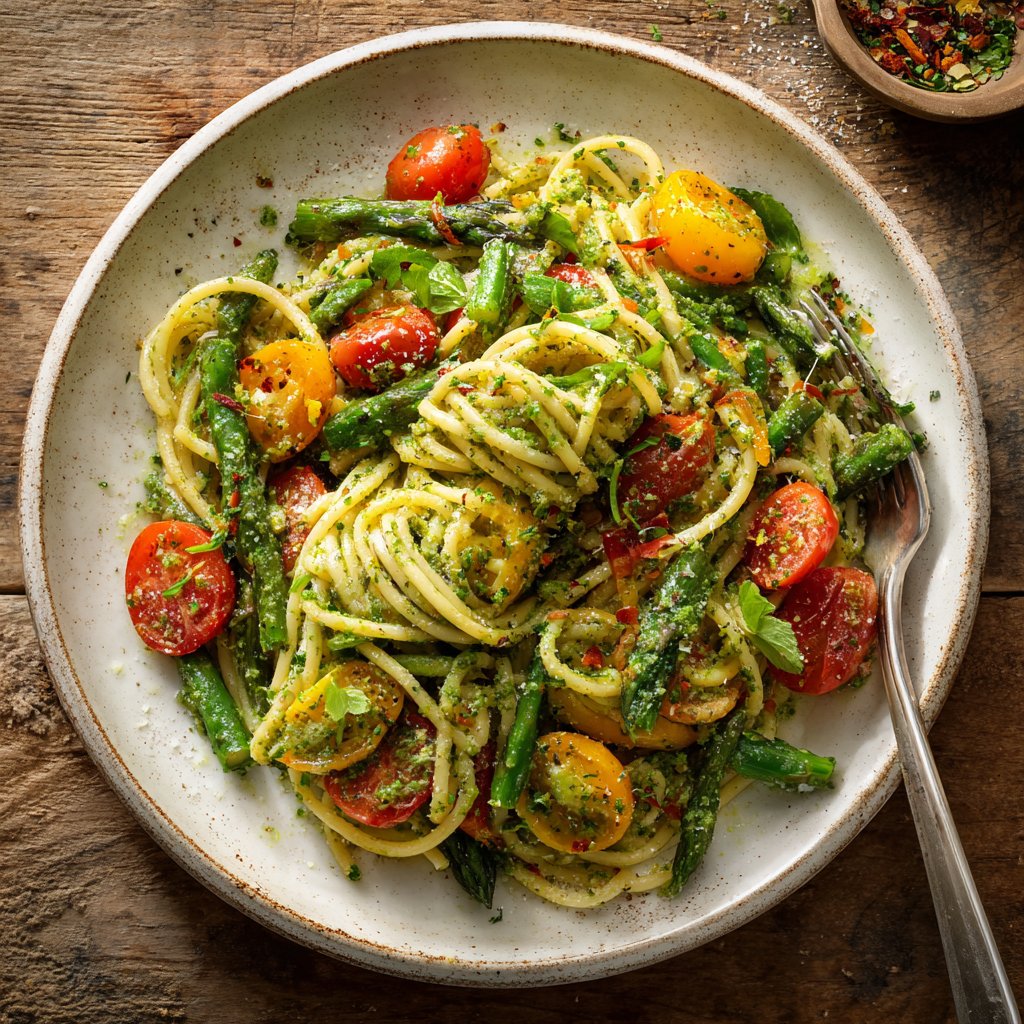
When I first made Pasta Primavera with Pesto, I was amazed at how quickly it came together. I spent some time perfecting the pesto, using fresh basil and nuts, which really made a difference. The key is to blend until creamy but still leaving a bit of texture for a rustic feel. Once you toss the pasta with vibrant seasonal vegetables, the dish turns into a feast for both the eyes and the palate.
During my trials, I learned that adding cherry tomatoes towards the end of cooking retains their sweetness and juiciness. A sprinkle of Parmesan just before serving elevates the flavors even more. It’s a lovely way to enjoy veggies without compromising on taste, making it my go-to dish in the spring!
Why You'll Love This Recipe
- A delightful medley of fresh vegetables and herbs in every bite.
- Homemade pesto adds a deliciously rich and vibrant flavor.
- Quick to prepare, making it perfect for busy weeknights.
Perfecting the Pesto
The magic of this Pasta Primavera lies in the homemade pesto. Using fresh basil is crucial; it not only provides vibrant color but also a strong aromatic flavor that dried herbs can't replicate. When making the pesto, be sure to pulse the ingredients just enough to achieve a coarse paste rather than a smooth puree. This texture helps the pesto cling beautifully to the pasta and vegetables, ensuring a flavor-packed bite every time.
If you're looking for a nut-free alternative to pine nuts, consider using sunflower seeds or even nutritional yeast for a cheesy flavor. Toasting the pine nuts slightly before adding them to the processor enhances their flavor, bringing out a buttery note that amplifies the overall taste of the pesto. Just keep an eye on them as they can burn quickly—2-3 minutes in a dry skillet should do the trick!
Vegetable Variations
One of the joys of Pasta Primavera is the flexibility in vegetable choices. While bell peppers, zucchini, and cherry tomatoes are standard, feel free to incorporate seasonal veggies based on what you have. Asparagus, broccoli, or snap peas can add delightful crunch and color. Just remember to cut all vegetables into similar-sized pieces for even cooking; I'll often think about bite size—around one inch—so everything is tender yet retains some crispness.
For added depth, consider roasting the vegetables instead of sautéing them. This will develop their natural sugars, creating a caramelized flavor that pairs wonderfully with the bright pesto. Roast vegetables at 425°F (220°C) for about 20 minutes, tossing halfway through to ensure even cooking. This method also enhances the textural contrast with the pasta.
Serving and Storing
Serving Pasta Primavera is all about presentation. A sprinkle of extra Parmesan and a few whole basil leaves on top create a beautiful finish that elevates the dish. Drizzling a bit of high-quality olive oil before serving can also add an inviting shine and flavor boost. If you have some lemon zest on hand, a light sprinkle can brighten up the entire meal, hinting at freshness and vibrancy.
If you're making this dish ahead of time, cook the pasta until just shy of al dente. This way, when you reheat, it won’t become mushy. Store leftovers in an airtight container in the refrigerator for up to three days. Reheat in a skillet over medium heat, adding a splash of water or olive oil to help restore its sauciness and overall moisture.
Ingredients
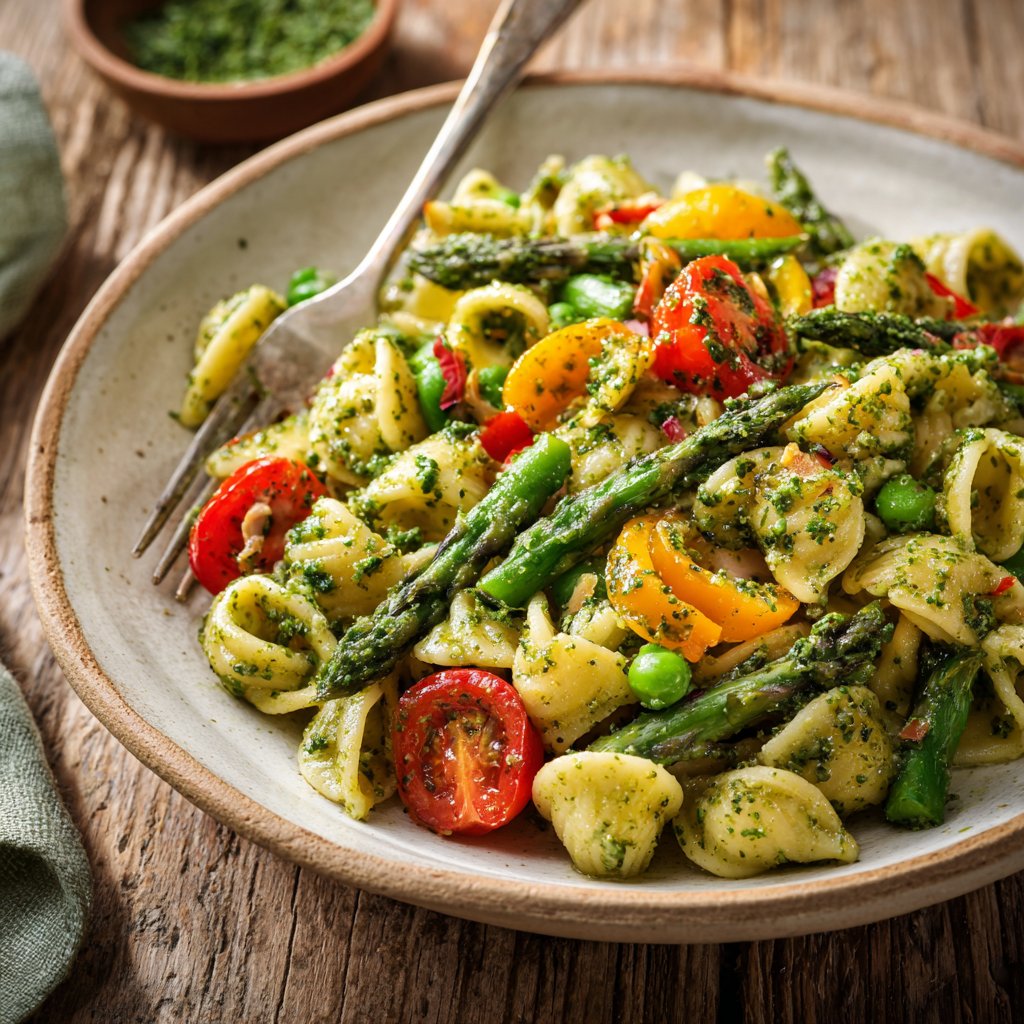
Gather these fresh ingredients for a delicious Pasta Primavera with Pesto:
Ingredients
- 12 oz pasta (any type)
- 2 cups assorted vegetables (bell peppers, zucchini, cherry tomatoes)
- 1 cup fresh basil leaves
- 1/2 cup grated Parmesan cheese
- 1/3 cup pine nuts
- 2 cloves garlic
- 1/2 cup olive oil
- Salt and pepper to taste
Feel free to mix and match your favorite veggies!
Instructions
Follow these steps to create your Pasta Primavera with Pesto:
Cook the Pasta
In a large pot of salted boiling water, cook the pasta according to package instructions until al dente. Drain and set aside.
Prepare the Pesto
In a food processor, combine basil leaves, pine nuts, garlic, and Parmesan. Pulse until finely chopped. With the processor running, slowly add olive oil until fully blended. Season with salt and pepper.
Sauté the Vegetables
In a large skillet, heat a tablespoon of olive oil over medium heat. Add your assorted vegetables and sauté until tender, about 5 to 7 minutes.
Combine
Add the cooked pasta to the skillet with the sautéed vegetables. Pour in the pesto and mix thoroughly until everything is well coated.
Serve
Serve immediately with extra Parmesan cheese on top.
Enjoy your colorful dish!
Pro Tips
- For a nut-free version, substitute the pine nuts with sunflower seeds in the pesto. You can also add grilled chicken or shrimp for extra protein.
Ingredient Insights
While Parmesan is traditional in pesto, feel free to swap for Pecorino Romano for a sharper flavor. If you're vegan or dairy-sensitive, nutritional yeast can replicate that cheesy flavor without the dairy. For a creamier sauce, adding a touch of heavy cream or a dollop of mascarpone right before serving can transform the dish into something rich and luxurious.
When choosing pasta, whole grain or gluten-free options are great alternatives depending on dietary needs. Whole grain pasta offers a nutty flavor and higher fiber content, while gluten-free pasta can be made from quinoa or brown rice, allowing everyone to enjoy this vibrant dish without compromising on taste or health.
Cooking Techniques
Cooking pasta in well-salted water is important to ensure it’s flavorful on its own. A good rule of thumb is to use around 1 tablespoon of salt per 4 quarts of water. Make sure to taste the water; it should taste as salty as the sea! Also, remember to reserve some of the pasta cooking water before draining; this starchy liquid can help thicken and bind your sauce later on.
Pay attention to the cooking order of your ingredients. I always start with the pesto, because it helps infuse the oil with flavors before adding vegetables. Additionally, when you add the pesto to the pasta, turn off the heat to preserve the vibrant green color and fresh taste of your basil.
Scaling the Recipe
This recipe is easily scalable for larger gatherings—simply increase the ingredient quantities while keeping the same ratios. For a party of ten, doubling the pasta and pesto while keeping the same variety of vegetables will ensure everyone has a flavorful meal without altering the dish's character. Whereas for meal prep, making a batch and storing servings in individual containers can simplify weekday lunches.
If you're cooking for two or even just one, this dish can also be easily halved. Using just 6 oz of pasta and 1 cup of vegetables will yield a generous portion without too many leftovers. Just keep in mind that adjusting the cooking times slightly may be necessary to avoid overcooking smaller amounts.
Questions About Recipes
→ Can I make the pesto in advance?
Yes, you can make the pesto ahead of time and store it in the refrigerator for up to one week.
→ What vegetables can I use?
Feel free to use any veggies you have on hand, such as asparagus, spinach, or broccoli.
→ Is this dish vegan?
You can make it vegan by omitting the Parmesan cheese or using a dairy-free alternative.
→ How can I store leftovers?
Store leftovers in an airtight container in the refrigerator for up to 3 days. Reheat gently on the stove.
Pasta Primavera with Pesto
Created by: The Annasrecipes Team
Recipe Type: World Cuisine
Skill Level: Intermediate
Final Quantity: 4 servings
What You'll Need
Ingredients
- 12 oz pasta (any type)
- 2 cups assorted vegetables (bell peppers, zucchini, cherry tomatoes)
- 1 cup fresh basil leaves
- 1/2 cup grated Parmesan cheese
- 1/3 cup pine nuts
- 2 cloves garlic
- 1/2 cup olive oil
- Salt and pepper to taste
How-To Steps
In a large pot of salted boiling water, cook the pasta according to package instructions until al dente. Drain and set aside.
In a food processor, combine basil leaves, pine nuts, garlic, and Parmesan. Pulse until finely chopped. With the processor running, slowly add olive oil until fully blended. Season with salt and pepper.
In a large skillet, heat a tablespoon of olive oil over medium heat. Add your assorted vegetables and sauté until tender, about 5 to 7 minutes.
Add the cooked pasta to the skillet with the sautéed vegetables. Pour in the pesto and mix thoroughly until everything is well coated.
Serve immediately with extra Parmesan cheese on top.
Extra Tips
- For a nut-free version, substitute the pine nuts with sunflower seeds in the pesto. You can also add grilled chicken or shrimp for extra protein.
Nutritional Breakdown (Per Serving)
- Calories: 400 kcal
- Total Fat: 22g
- Saturated Fat: 4g
- Cholesterol: 10mg
- Sodium: 150mg
- Total Carbohydrates: 48g
- Dietary Fiber: 5g
- Sugars: 3g
- Protein: 12g